To my AP Gov class

One fine summer morning,
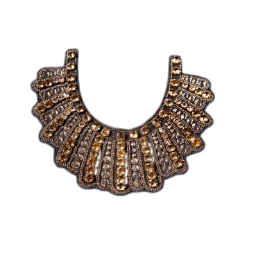
In his robes and his collar,
Horton went off to court
To argue and holler.
The first case Horton heard was the case of McCulloch v. Maryland in 1818. The state government of Maryland allowed itself to impose taxes on the Second Bank of the US. James McCulloch refused to pay the tax.
The Court made a unanimous decision that Congress had the power to establish the bank and Maryland did not have the right to tax it. This case established that Congress had implied powers when they used the necessary and proper cause.
Who Won?: McCulloch
Next, Horton looked at The United States v. Lopez. Alfonzo Lopez, a senior in high school, brought a weapon into his school and was arrested for bearing firearms on school grounds. This case escalated to the federal level for violating the Gun-Free School Zones Act of 1990. This case was controversial because the Gun-Free School Zones Act technically violated the commerce clause. It was a very close decision (5--4), but the Act was declared unconstitutional.
Who Won?: Lopez


Horton's next case was the case of Engel v. Vitale, a case which challenged the authorization for schools to say a short prayer in the morning (regardless of whether it was required or not). The Supreme Court ended up ruling that school prayer violated the Establishment Clause and was therefore Unconstitutional. This case set the rule going forward that school prayer was not allowed in schools.
Who Won?: Engel

The case of Wisconsin v. Yoder was a case about the federal school requirements and if people should be punished for not meeting those requirements for religious reasons. Jonas Yoder was a member of the Amish religion and refused to send his kids to school because it went against his beliefs. The Supreme Court ruled that the freedom of religion was more important than the federal education requirements. This case proved that a person's First Amendment rights are held as more important than some federal guidelines in the Supreme Court.
Who Won?: Yoder



The case of Tinker v. Des Moines Independent Community School started because a group of students wore black armbands to school to protest U.S. involvement in the Vietnam War. Students who refused to take it off were suspended from school. This was deemed to be a violation of the First Amendment right to freedom of expression by a 7-2 majority. This case solidified the rights that students are entitled to in school.
Who Won?: Tinker
Horton's next case, New York Times Co. v United States, there was a case over the press' release of the Pentagon Papers, papers about the US involvement in the Vietnam war. This ruling of this case was that if the papers were not published, it would be a violation of the Right to Freedom of the Press. The newspapers were allowed to publish the papers.
Who Won?: New York Times
In Shenck v. United States, Shenck was taken to court for refusing the WW1 military draft and speaking out against it. The Supreme Court was trying to uphold the Espionage Act, which prevented speaking out against the press about military drafts. Shenck argued that the Act violated his First Amendment rights. He was convicted. This case is what caused courts to invent the "clear and present danger" test to decide when freedom of speech was allowed to be limited.
Who Won?: United States
Gideon v Wainwright was a debate over whether all people on trial had the right to an attorney even if they couldn't pay for one. The court ruled that states were required to provide an attorney if the defendant couldn't afford to get one themselves. This defined the 6th amendment from then on.
Who Won?: Gideon
Roe v. Wade was a debate that challenged the Texas law that forbade abortions unless a doctor decided it was necessary to save the woman's life. In 1970, it was decided that a woman did have a right to an abortion if she chose to have one.
In 2022, the decision for this case was overturned and left the decision up to individual states to determine whether they would allow abortions.
Who Won?: (originally) Roe
- Full access to our public library
- Save favorite books
- Interact with authors
- < BEGINNING
- END >
-
DOWNLOAD
-
LIKE
-
COMMENT()
-
SHARE
-
SAVE
-
BUY THIS BOOK
(from $3.39+) -
BUY THIS BOOK
(from $3.39+) - DOWNLOAD
- LIKE
- COMMENT ()
- SHARE
- SAVE
- Report
-
BUY
-
LIKE
-
COMMENT()
-
SHARE
- Excessive Violence
- Harassment
- Offensive Pictures
- Spelling & Grammar Errors
- Unfinished
- Other Problem





COMMENTS
Click 'X' to report any negative comments. Thanks!