
We have combined Science and the Arts to examine three artefacts from different countries, under microscopes ranging from the simple Light Microscope to other advanced microscopes like the EDS and Micro X-ray diffraction Microscope. We have also done certain activities like travel writing and poems, and channelled our inner poets. We proudly present our conclusions on the topic.
Introduction
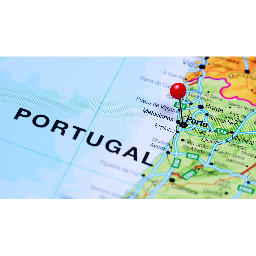
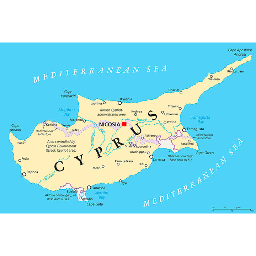
Those Left Behind - Painting
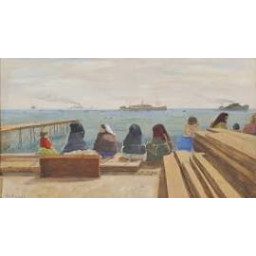
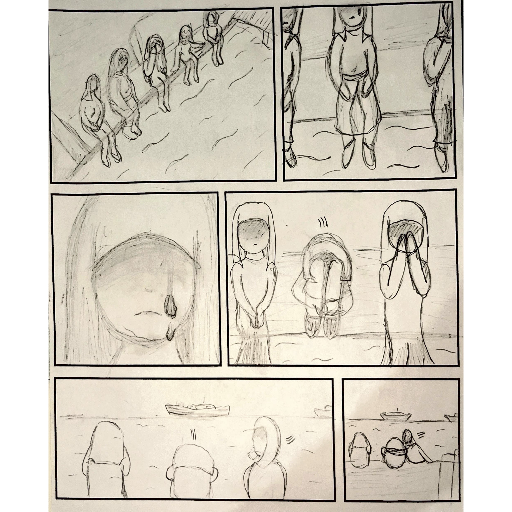
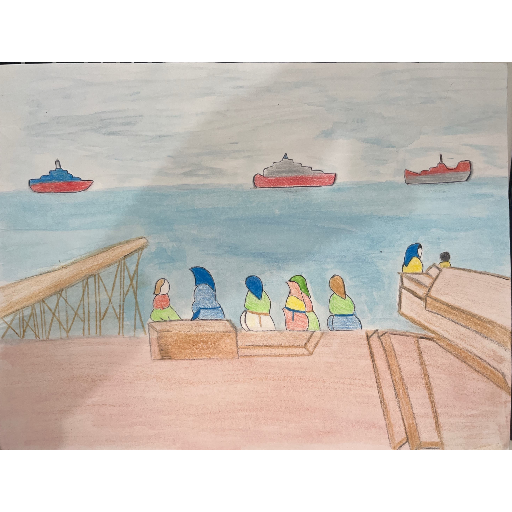
This painting was done by Michael Michaelides in 1950. It shows a scene after the Second World War, when there was great economic distress and people migrated, leaving their families behind to search for resources like money and food. This painting portrays women and children gazing out to the horizon, watching the ships that took their family to a new land.
The painting was made using Oil paints, Plywood and Varnish was used to preserve it.
Analysis
Five different microscopes were used to analyse the artefact:
Simple Light Microscope
Scanning Electron Microscope
Micro X-Ray Diffraction
Energy Dispersive Spectroscopy
Fourier Transform Infrared Spectroscopy
Each microscope was used to deepen further the analysis to understand the components of the paintings and the materials used to make it.
Throughout the analysis, we had two different points of interest:
-Green dress color
-Plywood wood
The Simple Light Microscope enlarged the points of interest and we were able to observe the green paint and the plywood used which showed layers in it.
The SEM microscope analysis showed us that the Plywood wood was made from coniferous tree wood.
The EDS is used to analyze the elements of the material and here the EDS analysis and any of these three elements might be the green paint:
-Malachite
-Verdigris
-Chrysocolla
Most probably Malachite and Verdigris.
The element identified in the Plywood was Carbohydrate which is present in wood.
The FTIR Spectrum and the XRD confirm that the wood is composed of cellulose(present in the plant cell walls), hemicellulose and Lignin, which is the component that gives wood its sturdiness and hardness and converts a plant cell to a wood plant cell.
The XRD graph confirms the green paint to be Verdigris, and it also confirms cellulose.
After peeling back the layers of the story behind the painting, we stepped beyond the canvas—into the world it once captured.
And suddenly, the painting breathed.
How did these women feel?
Were they afraid?
Or quietly strong,
holding history in their hands?
Mama and I
We have been left behind.
Dad said it is for good.
But if so, I don't get why
Mom cries more than she should.
They left this morning early.
Tears in everyone's eyes.
My brother didn't want to go.
He begged through muffled cries.
I didn't want to stay behind.
But someone had to stay.
They said I was strong enough.
To watch things while they're away.
The streets are still and quiet,
Like they forgot how to breathe.
I stare at all empty doors,
And wonder why they leave.
I sit and hug my brother's toy;
The one he left behind for me.
He said, ''You will need a friend at night, when you can't help, but see-''
But Mama lights a candle bright,
Each evening when it's dark.
She says, ''As long as there is a flame,
there is hope inside its spark.

Travelling and Travel routes
TRAVEL
In the past, people travelled for many reasons, but entertainment was rarely one of them, as travel was difficult and time-consuming due to limited transportation options.
People still travelled for many reasons, including:
-Trade
-Colonialization
-Resources
It was imperative to travel to make an exchange of goods with neighbouring lands, expand territories and search for resources like fresh water and fertile land.
Trade was of done on the Silk routes, which connected China to Europe and was the beginning of the trade.
The Alm Dish
In 2014, a violent storm, named Hercules, washed a shipwreck and its cargo ashore on the Belinho beach in Portugal.
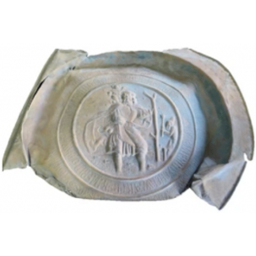
This artefact represents the myth of St. Christopher, who was known to protect sailors and ships. He is often shown dressed in a tunic and cape, carrying the baby Jesus on his shoulder, supported by a staff in his left hand. At his left appears a hermit holding a torch in both hands.
The Alm dish is culturally significant as it expresses the sailors' faith and belief as they carried it on the voyage.
By studying this particular artefact, we can understand the traditions and customs of that specific area and time.
By researching its material and construction, we can understand its value economically during that period and the status of the craftsmen or the person who might have asked for it to be made.
Significance
Sunken Faith
The seas are stormy
As if the devil himself churned them,
As if the gods had unleashed their wrath.
But they charge through the storm,
Sailing ahead through it all.
They carry with them a blessing,
A show of their faith.
But will it be enough to save them
Sailing ahead through the storm
Alas, it was not enough,
Crashed on the rocks
Their ship groaned.
All lost to the sea,
Their lives, their faith all free
Analysis
Two points of Interest:
Edge of the disc
Embossed area of the disc
From the Light microscope, at the first point of interest, we were able to observe small formations that looked like holes. They all have a direction, showing us that this artefact was likely pressed and struck. In the second point of interest, we observe traces of gold colour.
In the first point of interest, SEM imaging provides a more detailed view of the surface morphology. The surface appeared rough and irregular, which may be an indication of wear, potentially due to poor preservation conditions over time. In the second point of interest, we see a relatively smoother surface, which might suggest that the edges suffered more of the damage.
EDS
From the first point of interest, we detected 96.56% copper(Cu) and 3.44% zinc(Zu), which are the characteristics of an alloy specifically brass. In the second point of interest, the elements identified were gold (98%), silver (1%), and copper (1%), indicating the use of a gold alloy likely derived from reused jewellery.
The FTIR and XRD
These methods do not give us any new information, and the XRD analysis confirms what we know.
We are not able to identify any preservation techniques.
- Full access to our public library
- Save favorite books
- Interact with authors
- < BEGINNING
- END >
-
DOWNLOAD
-
LIKE
-
COMMENT()
-
SHARE
-
SAVE
-
BUY THIS BOOK
(from $5.19+) -
BUY THIS BOOK
(from $5.19+) - DOWNLOAD
- LIKE
- COMMENT ()
- SHARE
- SAVE
- Report
-
BUY
-
LIKE
-
COMMENT()
-
SHARE
- Excessive Violence
- Harassment
- Offensive Pictures
- Spelling & Grammar Errors
- Unfinished
- Other Problem





COMMENTS
Click 'X' to report any negative comments. Thanks!