



This book was conceived within the scope of the SciArt project, an initiative that stands out for its innovative approach to the study of cultural heritage. By placing the analysis of artefacts from different cultures at the centre of learning, the project promoted a harmonious integration between formal and non-formal education, adopting a truly transdisciplinary STEAM (Science, Technology, Engineering, Arts and Mathematics) perspective.
The 8th-grade class from Eugénio de Andrade Basic School, located in the city of Porto, Portugal, spearheaded a highly relevant educational project by creating this book, the result of collaborative and multidisciplinary work. Under the careful guidance of their teachers, the students had the opportunity to develop learning in various disciplinary areas: Natural Sciences, Technological Education, Visual Arts, Physics and Chemistry, History, English, Mathematics and Portuguese.
In the Technological Education discipline, the exploration of the digital tools StoryJumper and ARTutor, used in the creation of this book, was dynamicised.
This integrative approach, based on the curriculum of each discipline, promoted not only the acquisition of specific knowledge but also the development of transversal competencies such as teamwork, autonomy, creativity, problem-solving, critical thinking, and communication skills. The final result is a work that reflects the commitment, dedication, and collaborative spirit of everyone involved, constituting a valuable testament to the educational potential of articulating different areas of knowledge in the exploration of cultural heritage.
Versions of this e-book in Portuguese and Portuguese Sign Language were prepared.
DISCOVERING OURSELVES THROUGH SCIENCE AND ART
On December 6, 2025, we began our study journey. This day was dedicated to difference: learning would take place a few tens of kilometres to the North, in search of traces of the past, in search of ourselves – who we were, who we are, sitting on the shoulders of successive generations of men and women who preceded us.
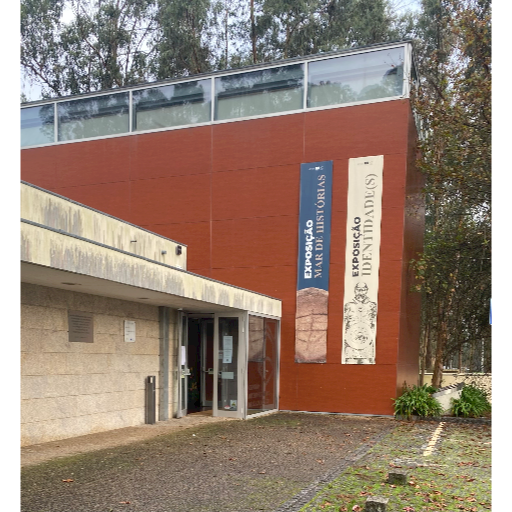
We moved to the S. Lourenço Interpretive Centre, in Esposende, and carried out activities guided by an archaeologist and a conservation and restoration technician who greatly helped us in our discovery.

We quickly moved away from the hustle and bustle of the city to find ourselves in the middle of nowhere. In this outdoor space of the Archaeological Center, we entered into dialogue with nature, where silence is heard and everything transports us to another time.
Inside the museum, the protagonists are the objects of yesteryear, which shine against the black background and capture our attention and curiosity, leading us to discovery. Questions come thick and fast: "What is it that you're seeing? What is this object? And that one? Where did it come from? How did it get here? How old would it be? Is it ancient or contemporary? Did it come from a nearby place or a distant one? What would its function be?"
The activities we were going to carry out focused on three objects found there: a Roman denarius, an offering plate from St. Christopher, and a block of wood found nearby, in Belinho, Esposende.

OUR DISCOVERIES ABOUT THE ARTIFACTS
After the teachings, the activities carried out in the museum, and the research we conducted, we obtained answers and drew some conclusions.
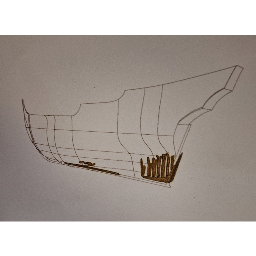
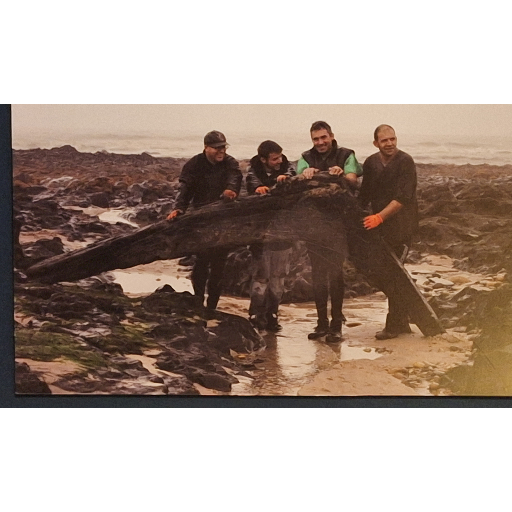
Regarding the Cadaste (Timber piece), we concluded that it was part of the structure of a 16th/17th-century ship that traveled from Northern Europe to the Iberian Peninsula and was shipwrecked. The wreckage was carried to Belinho beach, in Esposende, during an exceptionally strong storm (named "Hercules") in the winter of 2014. The Offering Plate was found in the same location and is part of this ship's cargo.
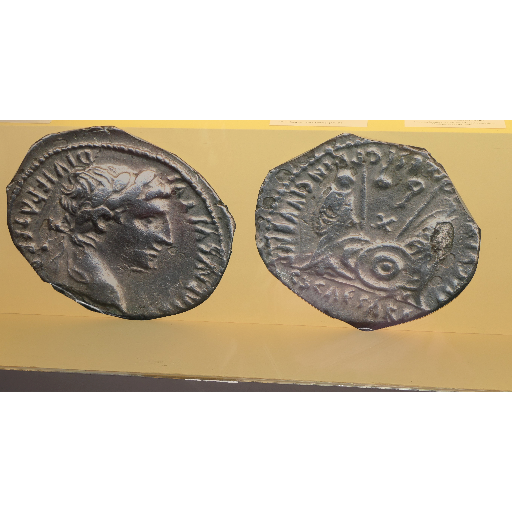
The denarius of Julius Caesar is a coin that is part of a monetary treasure of 19 Republican denarii discovered during the archaeological excavations of Castro de S. Lourenço, in 1988, also in the city of Esposende. It is possible that, like the Offering Plate, these coins are part of the cargo of the shipwrecked vessel.
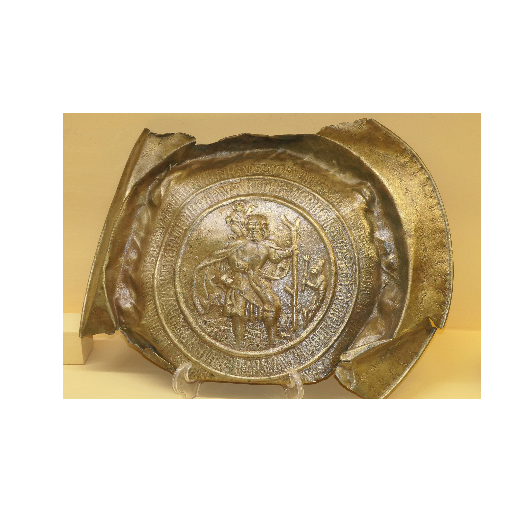
ARTIFACT 1
OFFERING PLATE OF ST. CHRISTOPHER
Origin: Archaeological site of the Belinho shipwreck, Esposende (Portugal)
Date: 16th/17th Century
ARTIFACT 2
DENARIUS OF JULIUS CAESAR
Origin: Archaeological site Castro de S. Lourenço, Esposende (Portugal)
Date: 46-45 BC
ARTIFACT 2
CADASTE OR STERN KNEE
Origin: Archaeological site of the Belinho shipwreck, Esposende (Portugal)
Date: 16th/17th Century
WHAT ELSE CAN ARTIFACTS TELL US?
We looked for more information about the objects. We wanted to know, precisely, what materials they were truly made of. For this purpose, we used five archaeometric methods in Natural Sciences classes (optical microscope and electron microscope (SEM)) and Physics-Chemistry classes (energy-dispersive X-ray spectroscopy (EDS); infrared spectroscopy (FTIR) and X-ray diffraction analysis (XRD)).
This innovative and interdisciplinary experience, uniting science and art in the study of artifacts, was very enriching and useful in providing the answers we were seeking.
THE OPICAL MICROSCOPE
Offering plate
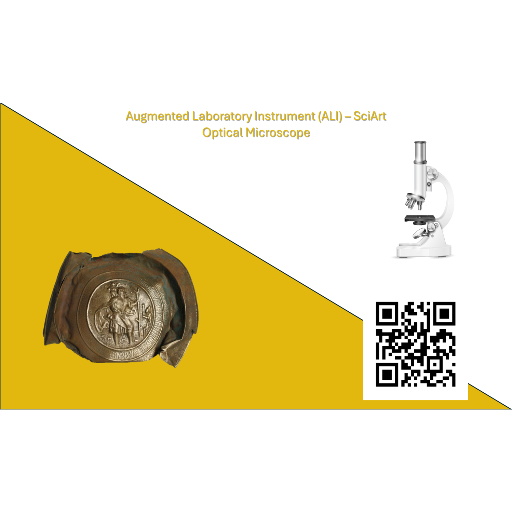
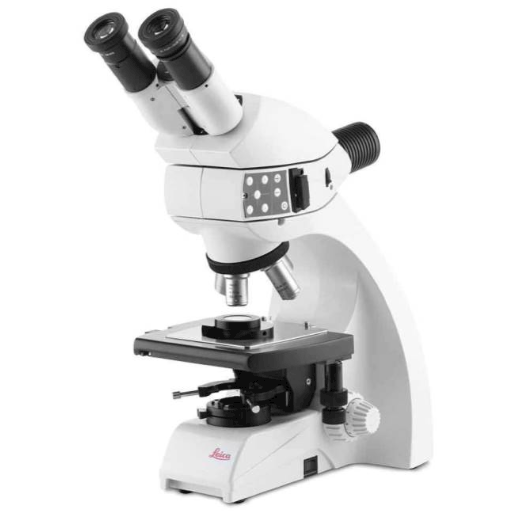
Through the images in the optical microscope, we were able to analyze surfaces and details of the artifacts, identifying patterns and textures of the materials, revealing details not visible to the naked eye.
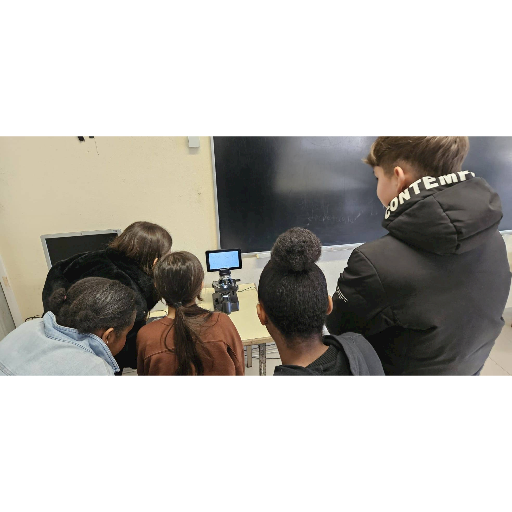
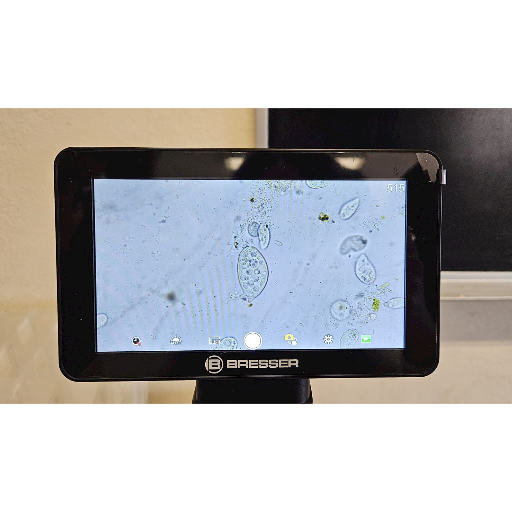
To better understand the functioning of this apparatus, we used the optical microscopes available in our school and were able to observe in detail the cellular structure of onion and identify microorganisms present in puddle water.
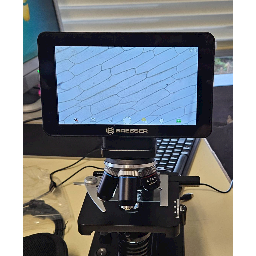
Molecular structure of an onion.
Puddle water microorganisms.
The analysis of the Offering Plate was done considering two points of interest: the first taken from the edge of the plate and the second taken from golden traces observed in the relief decoration.
When observing the optical microscopy images of the two points of interest, we realized that we obtained three distinct images for each of them. This happens because each image is captured with a different level of magnification. We can classify them from the lowest to the highest magnification. The first gives us an overall view of the object, the second reveals more structural details, and the third allows us to observe microscopic elements that would be imperceptible to the naked eye.
Observation of the edge
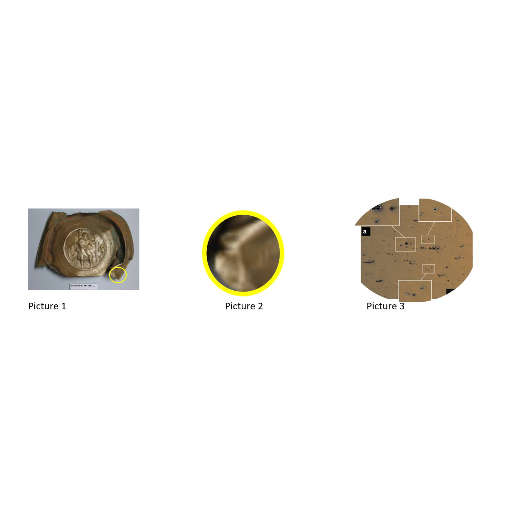
Upon zooming in on the bottom right corner of the plate, some formations are visible, which look like small holes (figure 3). They are all grouped together and all have the same direction. This tells us that the metal plate was pressed and struck to achieve its final configuration.
Observation of the golden traces
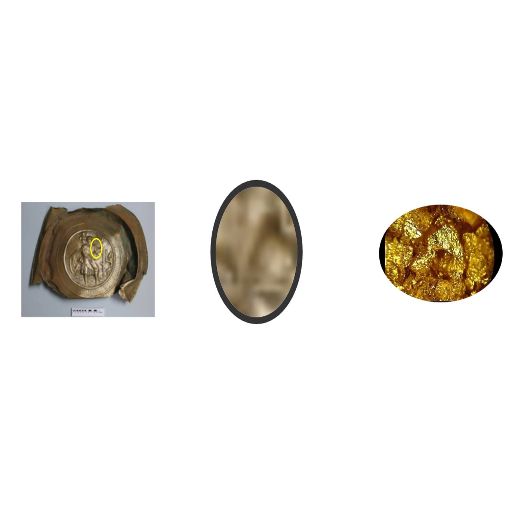
By enlarging the area with the relief decoration of the plate, we can observe evidence of wear and collect a sample (figure 2). In figure 3, we can observe traces of golden color.
THE ELECTRON MICROSCOPE
Offering plate
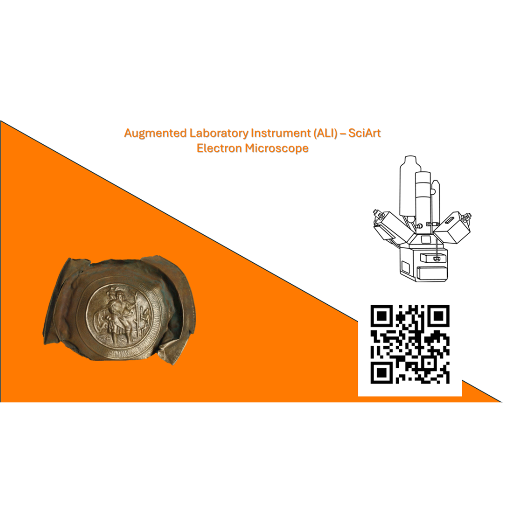
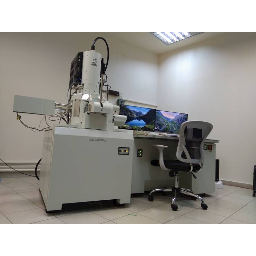
The electron microscope provides greater detail, but the materials cannot be identified.
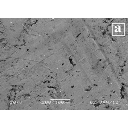
The magnifications of the two points of interest on the object reveal variations in the images. This may indicate differences in the composition of the materials or in the surface structure of the analysed areas. These differences are fundamental for a better understanding of the nature of the object studied.
When we use electron microscopy, one of the points of interest shows greater magnification than the other. We obtain black and white images because it does not use natural light, but rather electrons.
Observation of the edge
Observation of the golden traces
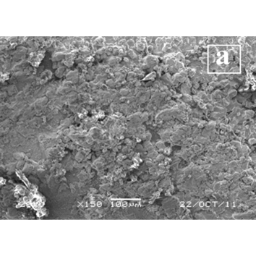
Point of interest taken from gilded traces observed in the relief decoration.
Point of interest taken from the edge of the plate.
THE OPICAL MICROSCOPE
Julius Caesar's Denarius
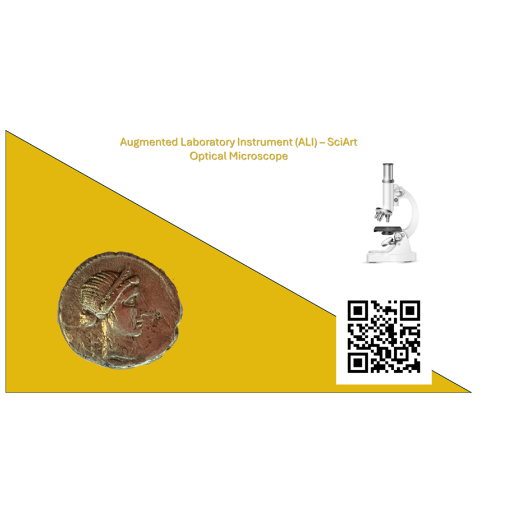
In the analysis of Julius Caesar's Denarius, the points of interest observed under the optical microscope included one side of the coin (obverse) with the objective of studying the appearance of the material and the presence of colour traces observed on the other side of the same coin (reverse).
We obtained three distinct images for each of them. This occurs because each image is obtained with a different magnification.
Observation of the observe
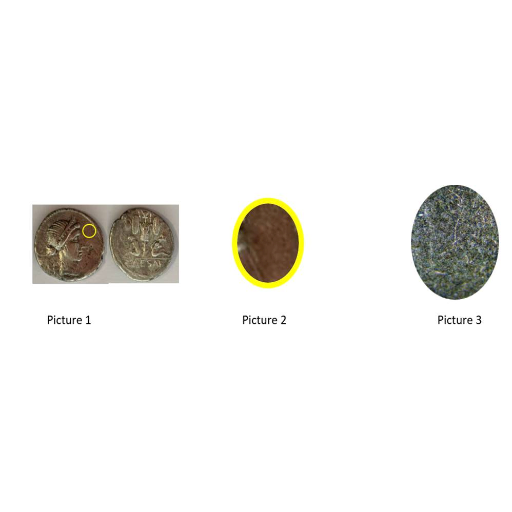
Upon magnifying the point of interest indicated in Figure 1, we observe that it is not smooth (Figure 2). In Figure 3, we observe that the metal surface is rough and worn.
Observation of the reverse
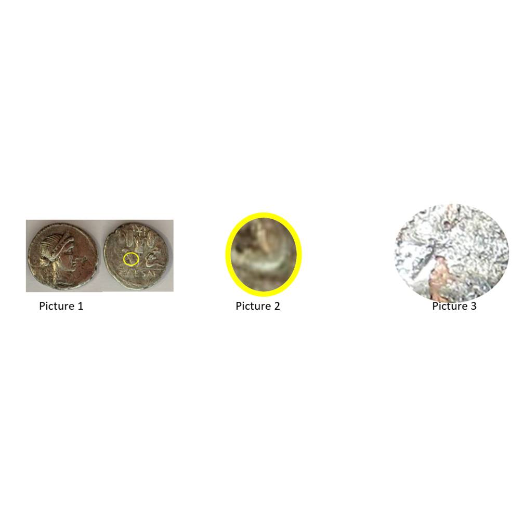
Upon magnifying the point of interest indicated in Figure 1 (reverse of the coin), we confirm the existence of traces of colour. In Figure 3 we can observe these traces of colour.
THE ELECTRON MICROSCOPE
Julius Caesar's Denarius
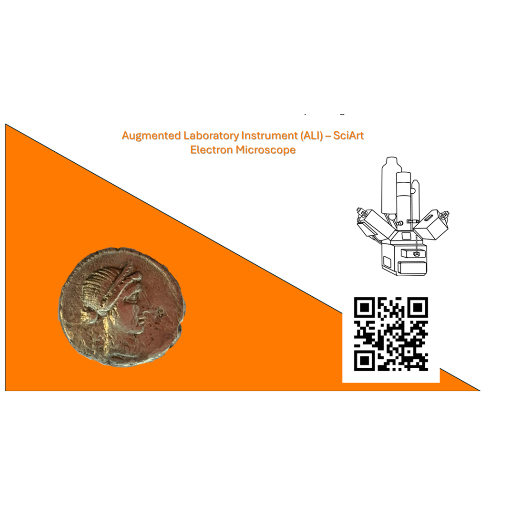
The images obtained with the electron microscope, related to the points of interest on the Denarius, provide similar information to that obtained for the Offering Plate.
In this way, we can only conclude that the Denarius presents different materials in its composition.
After using the optical microscope and the electron microscope, we conclude that, through these methods, addressed in Natural Sciences classes, it was not possible to identify the components present in the two selected areas of interest for each of the artefacts. The SEM did not provide direct information about the chemical composition; it was only possible to identify the presence of distinct materials based on differences in contrast and texture. For a more detailed analysis in terms of identifying the materials that compose the artefacts, it was necessary to resort to complementary analysis techniques.

What analytical methods can we use to identify the chemical elements present in a sample?
We identified 3 methods as effective analytical methods for the identification of chemical elements and their quantities in a sample. We watched the explanatory videos to understand the fundamental operating principles of each method.
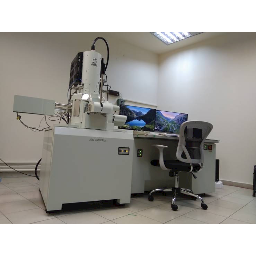
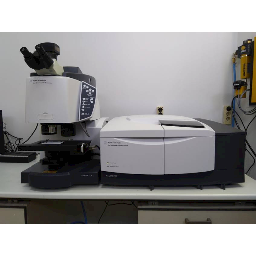
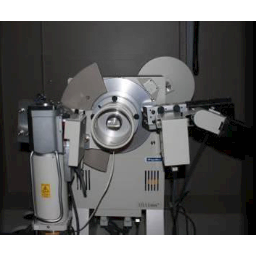
Energy Dispersive X-ray Spectroscopy (EDS)
Infrared Spectroscopy (FTIR)
X-ray Diffraction Analysis (XRD)
ENERGY DISPERSIVE X-RAY SPECTROSCOPY (EDS)
Offering plate
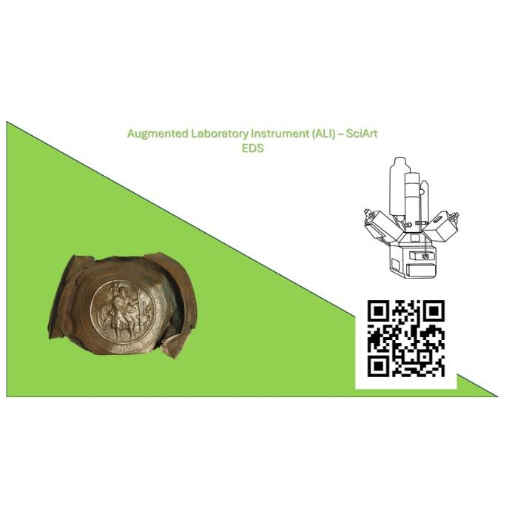

In the first point of interest, from the sample taken from the edge of the plate, what is observed in the EDS spectrum? Which chemical elements were found?
Answer: From the analysis of the obtained spectrum, we conclude that the material is, for the most part, constituted by the metal copper (Cu) and by a small quantity of Zinc (Zn). This composition corresponds to the metal alloy known as Brass.
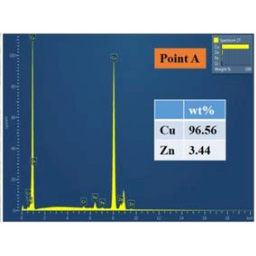
point of interest 1
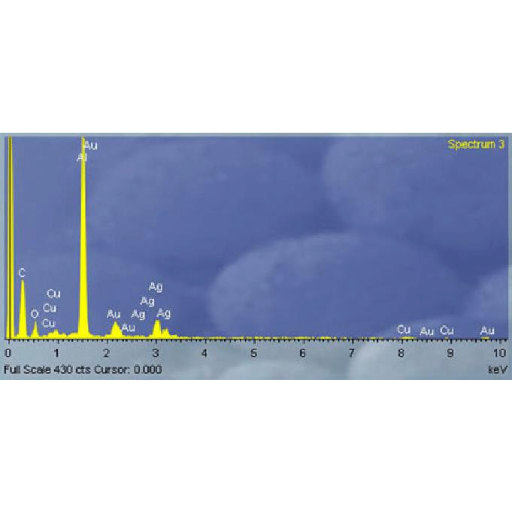
In the second point of interest, from the sample taken from the gold layer of the plate's relief, what is observed in the EDS spectrum? Which chemical elements were found?
Answer: We identified the following elements and quantities: Gold (Au) 98%; Silver (Ag) 1% and Copper (Cu) 1%. This specific composition indicates a gold alloy. It may mean that the gold alloy used came from the reuse of melted jewellery.
point of interest 2

INFRARED SPECTROSCOPY (FTIR)
Offering plate
We aim to obtain further information with this analytical method, for the two points of interest of the alms offering.
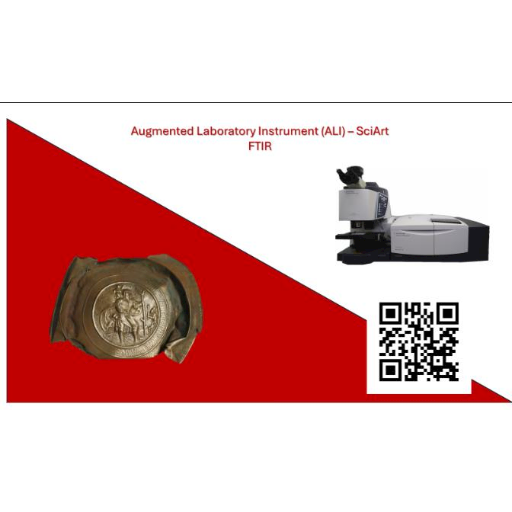

In the two points of interest (plate edge and gilded traces relief), what is observed in the FTIR spectra? Do they yield results?
Answer: The FTIR method did not provide any results for the two samples.
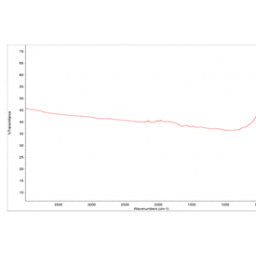
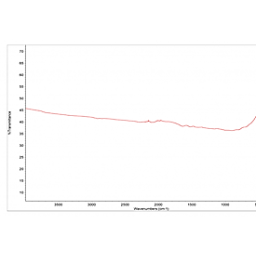
Conclusion: From the explanatory video of the method (which we initially watched), we know that this method does not allow identifying metals. Therefore, the elements previously identified do not appear in these results. We verified that it is important to use more than one elemental analysis method to obtain more precise information about the composition of the materials that make up the samples being analysed. It makes perfect sense for us to use yet another technique, the XRD method.
- Full access to our public library
- Save favorite books
- Interact with authors
- < BEGINNING
- END >
-
DOWNLOAD
-
LIKE(1)
-
COMMENT()
-
SHARE
-
SAVE
-
BUY THIS BOOK
(from $12.19+) -
BUY THIS BOOK
(from $12.19+) - DOWNLOAD
- LIKE (1)
- COMMENT ()
- SHARE
- SAVE
- Report
-
BUY
-
LIKE(1)
-
COMMENT()
-
SHARE
- Excessive Violence
- Harassment
- Offensive Pictures
- Spelling & Grammar Errors
- Unfinished
- Other Problem






COMMENTS
Click 'X' to report any negative comments. Thanks!