
This book was created and published on StoryJumper™
©2010 StoryJumper, Inc. All rights reserved.
Publish your own children's book:
www.storyjumper.com

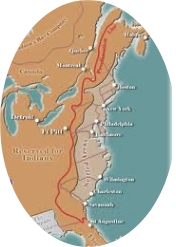
 Also, british wanted
to tax the colonists,
and the settlers to the
west of Appalachians
were well out of their
reach.
 Constant Indian attacks
against the expanding
British had caused the
British government to
stop the settlers from
moving westward.
 It stated that British colonists
settling to the west of the
Appalachian mountains was
illegal.
 Proclamation of
1763
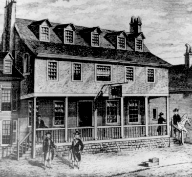
 It required the
colonies to house
the British soldiers
by buildings or local
housing systems such
as inns, abandoned
home,etc.
The colonial assemblies
did not like the idea.
They wanted to be
asked for demands if
they were
going to have the army
because supporting all
the army would have
caused a lot of financial
problem.
 The settlers did
not like the idea
of having traditional
armies near their
homes.
 Quartering Act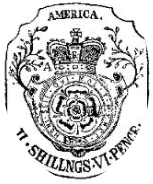
 The French and
Indian war had
caused Britain
a big financial
problem, which
led to the passing
of the "Stamp Act."It stated that all
the published
materials in North
America had to be
stamped; it represented
that the publisher had
paid the tax for their
products.
 Materials that
included stamps
were: legal
documents, diplomas,
almanacs, etc.
 Stamp Act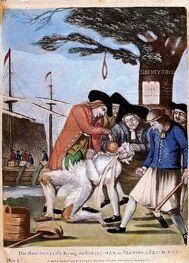
 Townshend Acts
 British also had a goal to
show the colonies that they
still had the authority to tax
them.
Act passed by the
British in order to
increase the
income from the
colonies.
 It taxed goods that
came in to the col-
onies, that wouldn't
affect the economy.
 The Boston Massacre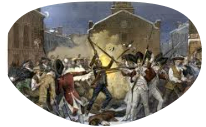
On March
5th, 1770, a
colonist
started thro-
wing stones,
sticks, etc to
a group of
British sold-
iers.
A few men were
killed, resulting the
problem to grow.The
Boston officials
ordered the British
troop out for
murdering the
citizens.
The event had
caused the
beginning of the
revolution. It
had spread
through the
colonies and
created a
rebellious
atmosphere.
 The Tea Act.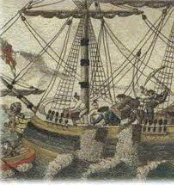
Tea was
allowed to
be shipped
in East
India
Company
ships
directly
from India.
Teas were to be marked by
special consignees: Boston,
New York, Philadelphia,
and Charleston
Three pence
per pound
was to be
collected on
tea in
America.
This angered the citizens
because they disliked the
idea
for only selected
merchants to trade.
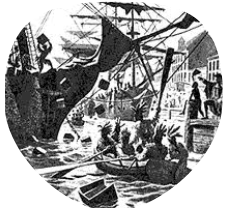
 The Boston Tea Party
On December 16, 1773, a group of men calling themselves the
“sons of Liberty” went to the Boston harbor, dressed as Mohawk
Indians, dumped 45 tons of tea into the Boston Harbor.

The Tea Act had caused
this group of men to
put this in action.
The governor stated that
it was not a rebellion
against the British, but
the only choice the
colonists had .
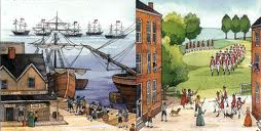
Series of laws posted
by British prime
minster Lord North as
a reply to the Boston
Tea Party.
The act stated that
Boston harbor was
closed until the
money worth of tea
was recovered.
It also stated that
all law officers had
to work under the
royal governor’s
control, and
banned the town
meetings that the
royal governor
didn’t allow.
 The Battles of Lexington and Concord.
The British were on
their way to
capture two of the
most effective
leaders:
John Hancock and
Samuel Adams.
When they
reached
Lexington, they
were gone and the
first gunshot came.
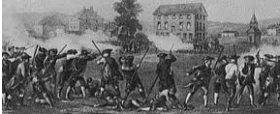
On April 18th, 1775 , British
general Thomas Gage sent 700
soldiers to destroy guns and
ammunition in the town of
Concord.
While British soldiers were coming
back to Boston, they were attacked
by patriot minutemen, local farmers
and townspeople.
You've previewed 10 of 16 pages.
To read more:
Click Sign Up (Free)- Full access to our public library
- Save favorite books
- Interact with authors


- < BEGINNING
- END >
-
DOWNLOAD
-
LIKE(1)
-
COMMENT()
-
SHARE
-
SAVE
-
BUY THIS BOOK
(from $3.19+) -
BUY THIS BOOK
(from $3.19+) - DOWNLOAD
- LIKE (1)
- COMMENT ()
- SHARE
- SAVE
- Report
-
BUY
-
LIKE(1)
-
COMMENT()
-
SHARE
- Excessive Violence
- Harassment
- Offensive Pictures
- Spelling & Grammar Errors
- Unfinished
- Other Problem





COMMENTS
Click 'X' to report any negative comments. Thanks!