Women in science: Ypatia

Ypatia
Ypatia (born c. 350–370; died 415 AD) was a Hellenistic Neoplatonist philosopher, astronomer, and mathematician, who lived in Alexandria, Egypt, then part of the Eastern Roman Empire.
She was the head of the Neoplatonic school at Alexandria, where she taught philosophy and astronomy. She is the first female mathematician whose life is reasonably well recorded.
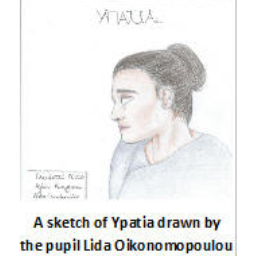
Her actions were considered dangerous for the spread of Christianity, and because of this a negative climate was cultivated against her, which led to her violent killing by the mob or by groups of fanatic monks. Hypatia was assassinated in 415 AD and her death transformed her into a "martyr for philosophy".
In her honor, a very large main-belt asteroid that was discovered by Russian astronomer Viktor Knorre on July 1, 1884, in Berlin was named 238 Hypatia.
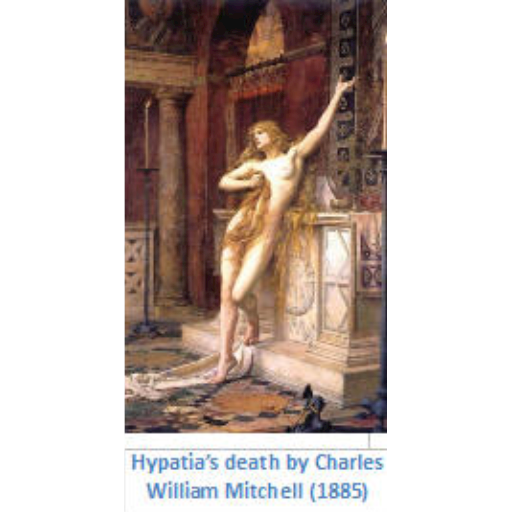
Her life and her work
She was the daughter of the mathematician and astronomer Theon, who wanted his daughter to be a "perfect human being" he taught Hypatia mathematics, philosophy, and astronomy, trained her in the art of rhetoric, had her read classical literature, and devised a physical exercise routine involving running, hiking, horseback riding, rowing, and swimming to keep her physically fit. For further study, he sent her to Italy and Athens.
After returning to Alexandria, Hypatia lectured and wrote about mathematics, astronomy, philosophy, and mechanics.
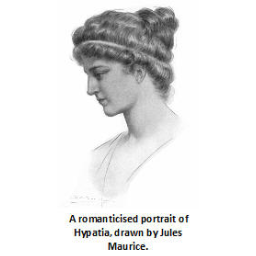
She was a mathematics and philosophy instructor at the Neoplatonist school in Alexandria and, in around 400, she became the director of the school.
She became a pole of attraction for the intellectuals of the time. Unfortunately, none of her works are saved. Evidence of the life and work of Hypatia can be found in various historical texts, such as the works of the ecclesiastic historian Socrates of Scholasticus or Socrates of Constantinople, in the correspondence he held with the Bishop of Kyrenia Synesius, in the Greek (Byzantine) dictionary (or byzantine encyclopedia) Souda or
Souida written in the 10th century as well as in reports by Damascus (neoplatonic philosopher).
The mathematician
According to the Souda or Souida dictionary, Hypatia wrote comments on the series of books called Arithmetic of Diophantus of Alexandria (solving algebraic equations) and an eight-volume popularization of Apollonius of Perga's work (theory of conic sections). Most scientists today recognize that Hypatia must have been one of the top mathematicians of her days, considering that particular mathematical skills are required to comment on Diophantus
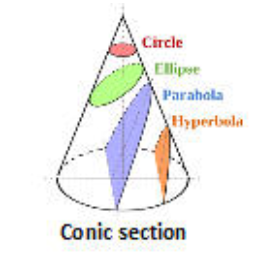
algebraic works and Apollonius cones (which laid the foundations for projective geometry).
The two projects face representations of higher order equations and due to the fact that Apollonius' approach was arithmetic and Diophantus approach was a geometric one, we understand that Hypatia was familiar with both algebraic and geometric representations of higher order equations.
- Full access to our public library
- Save favorite books
- Interact with authors
- < BEGINNING
- END >
-
DOWNLOAD
-
LIKE
-
COMMENT()
-
SHARE
-
SAVE
-
BUY THIS BOOK
(from $2.99+) -
BUY THIS BOOK
(from $2.99+) - DOWNLOAD
- LIKE
- COMMENT ()
- SHARE
- SAVE
- Report
-
BUY
-
LIKE
-
COMMENT()
-
SHARE
- Excessive Violence
- Harassment
- Offensive Pictures
- Spelling & Grammar Errors
- Unfinished
- Other Problem





COMMENTS
Click 'X' to report any negative comments. Thanks!