Women in Science:ELISE MEITNER

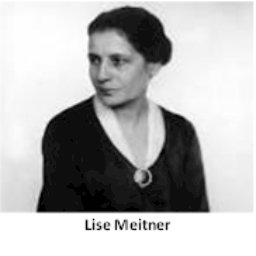
Elise (Lise) Meitner, (7 November 1878 – 27 October 1968) was an Austrian, later Swedish, physicist who worked on radioactivity and nuclear physics.
Meitner was part of the team that discovered nuclear fission (the first theoretical explanation of the nuclear fission process), an achievement for which her colleague Otto Hahn was awarded the Nobel Prize (1944).
Meitner is often mentioned as one of the most glaring examples of women's scientific achievement overlooked by the Nobel committee. In 1966 Hahn, Fritz Strassmann and Meitner were jointly awarded the Enrico Fermi Award by President Lyndon B. Johnson and the United States Atomic Energy Commission (USAEC) in Washington D.C.
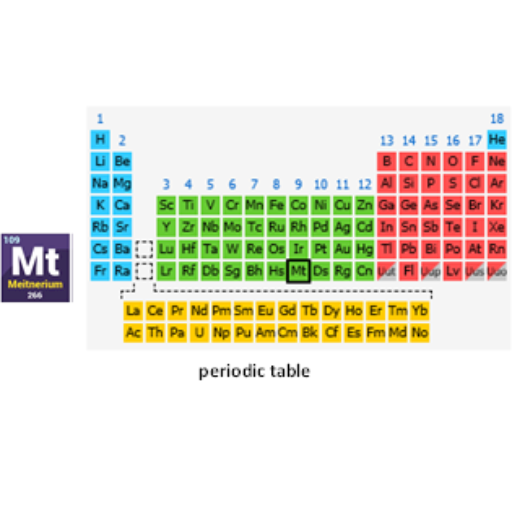
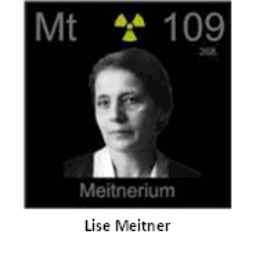
The Element with atomic number Z=109, is named Meitnerium in her honor.
Her first years in Vienna
“And even today I am filled with the deep gratitude for the unusual goodness of my parents and the extraordinarily stimulating intellectual atmosphere in which my sisters and brothers and I grew up.”
Lise Meitner
Meitner was the third of eight children of a Jewish family. As an adult, she converted to Christianity, following Lutheranism and being baptized in 1908.
Meitner's earliest research began at age 8, when she kept a notebook of her records underneath her pillow. She was particularly drawn to math and science, and first studied colors of an oil slick, thin films, and reflected light
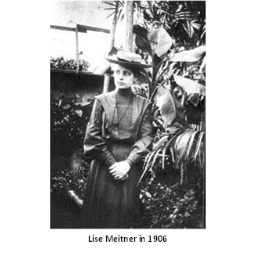
Her father, Philipp Meitner was one of the first Jewish lawyers in Austria. Women were not allowed to attend institutions of higher education in those days, but thanks to support from her parents, she was able to obtain private higher education, which she completed in 1901 with an "externe Matura" examination at the Akademisches Gymnasium. Owing to these Austrian restrictions on female education, Lise Meitner only entered the University of Vienna in 1901. She was inspired by her teacher, physicist Ludwig Boltzmann who taught her to see physics as “a battle for ultimate truth”. She studied physics and became the second woman to obtain a doctoral degree in physics at the University of Vienna in 1905.
Scientific career
“Science makes people reach selflessly for truth and objectivity; it teaches people to accept reality, with wonder and admiration, not to mention the deep awe and joy that the natural order of things brings to the true scientist.”
Lise Meitner
Encouraged by her father and backed by his financial support, she went to Berlin in 1906. Max Planck allowed her to attend his lectures, an unusual gesture by Planck, who until then had rejected any women wanting to attend his lectures. After one year, Meitner became Planck's assistant.
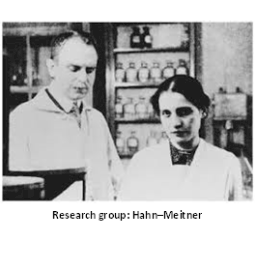
The director of the Institute of Chemistry in Berlin, Emil Fischer, allowed Meitner to work with the chemist Otto Hahn in a room which had formerly been the carpenter's workshop and had its own entrance from the street. When she needed the lavatory she had to visit a nearby restaurant. During these years when she worked together with chemist Otto Hahn she discovered with him several new isotopes (they become a research group). In 1909 she presented two papers on beta-radiation. In the period between 1900 and 1910 Meitner was one of just thirty women working in the new field of radioactivity.
She was such a rarity that even Rutherford, who encouraged women in his own laboratories, committed a gaffe. Passing through Berlin in 1908 after receiving his Nobel Prize, he was introduced to the thirty-year-old Lise Meitner. He had seen her name in publications, but even 'Lise' had failed to alert him. He exclaimed, 'in great astonishment, "Oh, I thought you were a man!"
In 1912 the research group Hahn–Meitner moved to the newly founded Kaiser –Wilhelm - Institute (KWI, today the Hahn - Meitner Building of the Free University) in Berlin-Dahlem, south west in Berlin. She worked without salary as a "guest" in Hahn's department of Radiochemistry. It was not until 1913, at 35 years old and following an offer to go to Prague as associate professor, that she got a permanent position at KWI.
In the first part of World War I, she served as a nurse handling X-ray equipment. She described that period saying “At night I feel homesick for physics, but during the day Ι think only of the patients.”
She returned to Berlin and her research in 1916, but not without inner struggle. She felt in a way ashamed of wanting to continue her research efforts when thinking about the pain and suffering of the victims of war and their medical and emotional needs.
In 1917, she and Hahn discovered the first long-lived isotope of the element protactinium, for which she was awarded the Leibniz Medal by the Berlin Academy of Sciences. That year, Meitner was given her own physics section at the KWI for Chemistry. In 1926, Meitner became the first woman in Germany to assume a post of full professor in physics, at the University of Berlin.
When Adolf Hitler came to power in 1933, Meitner was still acting as head of the physics department of the KWI for Chemistry. Although she was protected by her Austrian citizenship, all other Jewish scientists, including Szilárd, Fritz Haber, her nephew Otto Frisch, and many other eminent figures, were dismissed or forced to resign from their posts. Most of them emigrated from Germany. Her response was to say nothing and bury herself in her work.
In 1935, as head of the physics department of the KWI for Chemistry she and Otto Hahn, the director of the KWI, undertook the so-called "transuranium research" program (the elements with atomic numbers greater than 92 named as transuranium elements). This program eventually led to the unexpected discovery of nuclear fission of heavy nuclei.
After the Anschluss in March 1938, her situation became difficult. On July 13, 1938, Meitner, with the support of Otto Hahn and the help from the Dutch physicists Dirk Coster and Adriaan Fokker, she departed for the Netherlands. Meitner later said that she left Germany forever with 10 marks in her purse. Before she left, Otto Hahn had given her a diamond ring he had inherited from his mother: this was to be used to bribe the frontier guards if required. It was not required, and Meitner's nephew's wife later wore it.
- Full access to our public library
- Save favorite books
- Interact with authors
- < BEGINNING
- END >
-
DOWNLOAD
-
LIKE(2)
-
COMMENT()
-
SHARE
-
SAVE
-
BUY THIS BOOK
(from $5.19+) -
BUY THIS BOOK
(from $5.19+) - DOWNLOAD
- LIKE (2)
- COMMENT ()
- SHARE
- SAVE
- Report
-
BUY
-
LIKE(2)
-
COMMENT()
-
SHARE
- Excessive Violence
- Harassment
- Offensive Pictures
- Spelling & Grammar Errors
- Unfinished
- Other Problem





COMMENTS
Click 'X' to report any negative comments. Thanks!