To the fourth and fifth grades - I hope this might help with your studies.

Table of Contents
4 - What Caused The Civil War
18 - The Union Blockade of Georgia's Coast
24 - The Emancipation Proclamation
26 - The Battle of Chickamauga
30 - The Atlanta Campaign
32 - Sherman's March to the Sea
34 - The Andersonville Prison
What Caused the Civil War?
The Civil War was caused by a compound of conflicts and tensions between and within the states that were a part of the The United States at the time which include but are not limited to slavery, states’ rights, nullification, the Compromise of 1850, the Georgia Platform, the Dred Scott vs. Sanford Supreme Court Case, the election of Abraham Lincoln, and the secession of the confederate states from the United States.
When the US Constitution was written, it did not address slavery. States were able to decide whether to allow slaves or not. States that allowed slavery were called slave states, and most of the Southern United States (The South) were slave states. People could buy and sell (trade) slaves between slave states, but not free states. States that did not allow slavery were called free states, and most of the Northern United States were free states. In the free states there was a lot of talk of abolishing slavery by people called abolitionists.
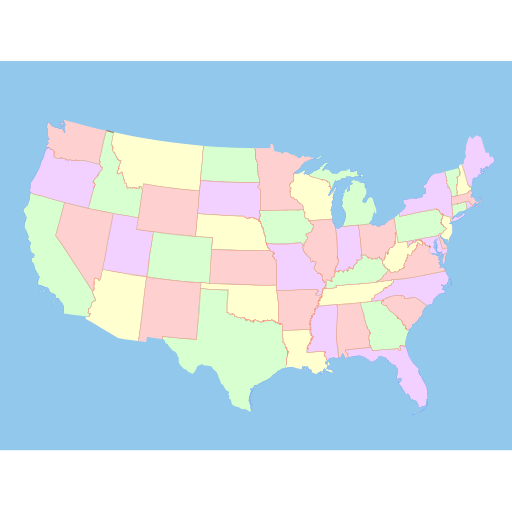


The southern states depended on slavery to fuel their economy. Because the South has a lot of fertile land, when they settled there, they decided to base their economy on agriculture, or farming. They needed workers to work on the farms, so they got slaves to do it. The northern states did not have to depend on slavery, as their economy was not an agricultural one, but one of industry and commerce. When they began moving to the North, they could not farm because of the poor soil quality and rocky grounds, so instead they began building cities and factories. They did not need so many slaves to run their economy, so they abolished slavery without too much trouble.
In the 1800’s, tension over slavery began between the North and the South. The abolitionists from the North spoke out against slavery and the people of the South did not like the Northern interference with their economy. Tensions continued to grow as talk of a new state came about. The North and the South argued over whether the new states would be slave states or free states and Kentucky Senator
Henry Clay told Congress that there needed to be a compromise to satisfy the North and the South.
In 1820, Congress passed the Missouri Compromise. The Missouri Compromise created two new states: Missouri and Maine. Maine was to be a free state and Missouri was to be a slave state. Because they created a free state and a slave state, it did not upset the balance between slave and free states, so everyone was happy. The Missouri Compromise created a line across United States territory that dictated whether a state was a slave state or a free state. The compromise stated that all states north of the line would be free states, and all of the states south of the line would be slave states.
It was then that the issue of states’ rights came about. In the South, people felt as though the government was encroaching too far into the states’ right to govern themselves. Many states thought that the states should have the final decision on issues such as which laws to follow. They thought that if a state didn´t

want to follow a federal law or tax they did not have to follow it; they could nullify the law. They also felt that states should be able to secede from The United States should they feel so inclined.
President Andrew Jackson placed a tariff on imported European goods in 1828 because the Southerners were buying goods from Europe and he wanted them to buy goods from the North. He used this tax to make the price of importing goods from Europe more than getting the goods from the North.
Southerners were unhappy about this tariff because it only benefited the Northern businesses and was actually detrimental to the Southern plantation owners who were then forced to pay higher prices to get their goods from the North. South Carolina put in place the Doctrine of Nullification (1832), which declared that the tariff was not valid in their state and threatened to withdraw from the United States if the tariff wasn’t lowered. Congress lowered the tariff in 1833 to prevent the secession of South Carolina.
In 1850, Congress passed the Compromise of 1850. After the war with Mexico in 1848, the United States gained the territories California, Utah, and New Mexico. This compromise created California as a free state but did not mention New Mexico or Utah. This compromise also abolished slavery in Washington D.C., though people still held slaves there.
The Compromise also included a section called the Fugitive Slave Act. This act required that all slaves be returned to their plantation in the South from wherever they were, including the North. This stripped former slaves like Dred Scott of their safety in the North and made it so that if they wanted to be free, they needed to get all the way up the the United Kingdom (Canada).
This compromise was heavily debated over in Georgia. Quite a few Georgians opposed the compromise and so the Georgia Platform was passed by Georgia lawmakers. The Georgia Platform stated that Georgia would accept the Compromise of 1850 as long as the North promised to follow the Fugitive Slave Act
and stop banning slavery in new states. The Georgia Platform was accepted by the North so that Georgia would not secede from the United States.
After the Compromise of 1850, the Fugitive Slave Act made it so that slaves already living in the North who thought that they were free needed to be returned to the South to be slaves once more. In 1854, people who didn’t like the Fugitive Slave Act came together in the form of a new political party: The Republican Party. This party wanted to stop the spread of slavery into new states and territories.
In 1857, the Supreme Court ruled over the Dred Scott vs. Sanford case. Dred Scott was a Missouri slave who had been living and traveling between Wisconsin and Illinois (free states) with his master. He thought that his time in the free states meant that he was free, but because of the Fugitive Slave Act, he wasn’t free. Scott knew that other slaves had fought in court for their freedom after living in free states and had gotten it, so he thought that he might do the same. Those
Dred Scott
people had sued for their freedom before the Compromise was passed, though, and Scott sued when the Compromise was in effect, meaning that he was not a free man.
The Supreme Court declared that Scott was not free and also said these things:
1: Slaves are not citizens of the United States and do not have the right to sue
2: Banning slavery in United States territories and/or states is unconstitutional
3: The national government has no right to stop the expansion of slavery into the western territories
These statements pleased Southern slaveholders and plantation owners as it made it so that they could keep slaves in any state. When the Northern abolitionists heard these statements they were angry because they could not stop the spread of slavery. The abolitionists came together after this and joined the Republican Party, shifting its goal from stopping the spread of slavery into new territories to ending
slavery completely in the United States.
The election of 1860 pushed the country to its breaking point. The Republicans nominated Abraham Lincoln to run for president and the Democrats nominated Senator Stephen Douglas, John Breckinridge, and John Bell to run for president. Abraham Lincoln won the election on November 6, 1860 and the South became concerned that he would abolish slavery. Even though Abraham Lincoln’s real goal was to keep the United States together, South Carolina seceded from the Union on December 6.
Georgia became divided over whether to secede along with South Carolina and split into two groups. One group was led by Georgia’s governor Joseph Brown and they wanted to secede from the United States. The other group, led by Alexander Stevens, disagreed and knew that Abraham Lincoln was not their enemy and foresaw economic ruin for Georgia if there was to be a civil war. Georgia’s legislature called a secession convention and voted 166 to 130 in favor of secession.
In January of 1861, Georgia seceded from the United States.
Within the year, most of the South had seceded from the United States to form the Confederate States of America. The Civil War began within the year between these Confederate States and the Union (Most of the North).


The Civil War Begins . . . 1861
The Confederate States of America
Vs
The Union
The Union Blockade of Georgia's Coast
After the Civil War started in 1861, the Union general Winfield Scott developed “The Anaconda Plan” under the directive of Abraham Lincoln to blockade the Southern Confederate coast. This plan blocked the importing of ammunition, guns, and other necessary war resources for use by the Confederacy along with blocking exports from the South, which stopped the flow of money into the Confederacy. In most states, the Union took over forts along the coast and stopped all ships from entering and exiting the Confederacy, but in Georgia, the Union focused on the Confederacy’s largest port: Savannah.
The Confederate war strategy was based around the Union blockade of the South. The Confederacy (Led by President Jefferson Davis) and its general, Robert E. Lee, started losing territory along their Southern border to the Union and realized that they would not be able to defend all of their border from the Union. Because

General Lee knew that the Union wanted to starve them of money and resources, he moved large groups of soldiers to protect the way that the resources and money were being moved around: Railroads. This only brought the Confederacy peace for a few days, though, as the Union caught word that a Confederate ship had gotten through their blockade and into the Port of Savannah.
Edward C. Anderson was a blockade-runner, meaning that his job was to sneak through the Union blockade. On November 11, 1861, he did just that and made it into the Port of Savannah, bringing with him rifles, cannons, swords, and military uniforms, which gave the Confederacy a chance to break through the Union blockade. The Union heard of this and knew that they needed to strengthen the blockade around large Confederate ports like Savannah. They took control of Georgia’s Barrier Islands and completely removed Confederate access to Savannah. This marked the beginning of the end for Georgia, because with the Port of Savannah blocked off, Georgia could only receive resources by rail, which would
later be destroyed during Sherman’s March To The Sea (Chapter 5).
The Georgians knew they needed to act quickly. They gathered together their small navy made up of the boats the Atlanta, the Georgia, the Savannah, the Macon, the Sampson, the Resolute, and the Isondiga along with torpedoes that were little but an annoyance to the Union navy and fought, but because the Union navy was superior in strength and experience, they took over Georgia’s coast.
Soldiers left St. Simons and Jekyll Islands after General Lee started moving troops to railroad locations. When the Union arrived to take over those islands, they found no troops waiting there and took over the islands easily. This was the case for most of Georgia’s islands including Tybee, Georgia’s northernmost island. This island was very close to Fort Pulaski, one of the forts made to protect the Savannah River, the only way for boats to get in and out of the Port of Savannah. On April 10, 1862, the Union began their plan to take over Savannah, beginning with taking over Fort Pulaski. On that night, Union soldiers attacked Fort Pulaski. Colonel Charles
Olmstead surrendered the Fort to the Union soldiers after the Union blew through the walls of the fort. This fort remained occupied by the Union soldiers throughout the rest of the war.
After this event, Fort McAllister became the Georgia’s last line of protection for Savannah. On July 29, the Union failed to take over the fort. On November 19, the Union failed to take over the fort. January 27, February 1, 27, and 28 were all dates when the Union tried and failed to take over Fort McAllister. The most damage that they did was to destroy a small boat.
Much later on in the war, on December 13, 1864, Fort McAllister was captured by Union General William T. Sherman and his troops on Sherman’s March to the Sea (Chapter 5). The Confederates realized that they could not defend Savannah any longer and moved out all of their troops from along the Savannah River and in Savannah. On December 22, 1864, General Sherman ended his march to the sea and gave the city of Savannah to Union President Abraham Lincoln as “A Christmas gift”.
- Full access to our public library
- Save favorite books
- Interact with authors
- < BEGINNING
- END >
-
DOWNLOAD
-
LIKE(1)
-
COMMENT()
-
SHARE
-
SAVE
-
BUY THIS BOOK
(from $7.19+) -
BUY THIS BOOK
(from $7.19+) - DOWNLOAD
- LIKE (1)
- COMMENT ()
- SHARE
- SAVE
- REMIX
- Report
-
BUY
-
LIKE(1)
-
COMMENT()
-
SHARE
- Excessive Violence
- Harassment
- Offensive Pictures
- Spelling & Grammar Errors
- Unfinished
- Other Problem






COMMENTS
Click 'X' to report any negative comments. Thanks!