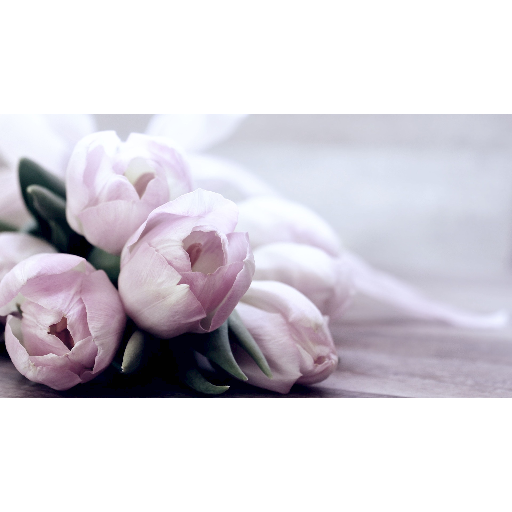
It's time to be with us !


Lets talk about endemic flowers !
eTwinning project between ukrainian,albanian,romanian and polish partners.
ALBANIA
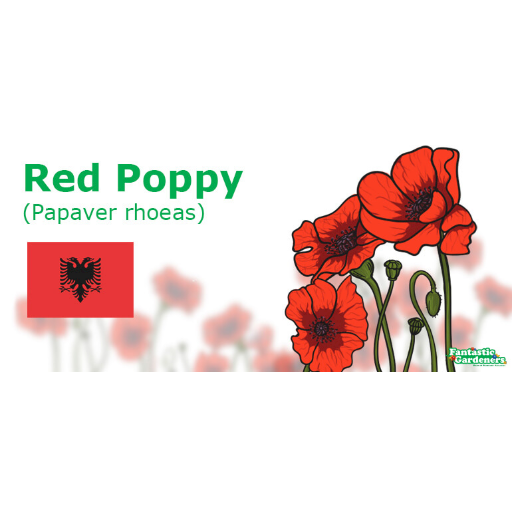
http://www.barnes-botany.co.uk/explore_albania.html
Acis ionica
Kingdom: Plantae
Clade: Angiosperms
Clade: Monocots
Order: Asparagales
Family: Amaryllidaceae
Subfamily: Amaryllidoideae
Genus: Acis
Species: A. ionica
Binomial name
Acis ionica
Acis ionica is a bulbous plant with narrow leaves, 12–22 cm long but only 2–3 mm wide. The leaves appear after flowering, which is in the autumn. The flowering stalk (scape) is usually 8–20 cm tall, with an inflorescence composed of two to four flowers, occasionally only one or as many as six. The inflorescence is subtended by two spathes, usually extending to below the level of the highest flower. Each flower opens widely and is borne on a stem (pedicel) about 16–28 mm long. The six tepals are white, generally 9–13 mm long. The outer three tepals have pointed tips. The pedicel lengthens after flowering. The black seeds are about 3 mm long
Distribution and habitat
Acis ionica is found in western Greece, on the islands of Zakynthos, Kefalonia and Lefkas, with populations on the nearby mainland of Greece and further north in coastal Albania (close to the city of Vlorë)

Albanian Lily Lilium albanicum
- TaxonomyPlants Kingdom Plantae
- Vascular Plants Phylum Tracheophyta
- Flowering Plants Subphylum Angiospermae
- Monocots Class Liliopsida
- Lilies, Supplejacks, and Allies Order Liliales
- Lilies Family Liliaceae
- Subfamily Lilioideae
- Tribe Lilieae
- True Lilies Genus Lilium
- Albanian Lily Lilium albanicum
https://www.inaturalist.org/photos/26750650
Tulipa albanica (Liliaceae), a new species from northeastern Albania
Tulipa albanica (Liliaceae) is illustrated and described as a new species from a serpentine area in Kukesi district
T albanica, discovered near the village of Surroj, has both red and more abundant yellow forms and may have a wider distribution in similar serpentine habitats in the Balkans.Description
T. albanica is a bulbous perennial reaching 15–40 cm (6–16 in) in height. The bulb is ovoid to ovoid-globose and 1.5 to 2.5 cm (58 to 1 in) in diameter. The stem is erect, glabrous, glaucous to greyish-green and the leaves, which vary from 3–5, reach a size of about 10–25 cm (4–10 in) long by 1–3.5 cm (38–1
38 in), and are glaucous to greyish-green. They grow alternately along the stem and the lowermost ones have strongly undulated edges.[4]
The stem bears a solitary large, erect, campanulate flower. It can be found in two colour: yellow to golden-yellow or carmine-scarlet to deep reddish-brown. The chromosome number is 2n = 2x = 24.[4]
https://en.wikipedia.org/wiki/Liliales
https://en.wikipedia.org/wiki/Liliales
InformationSymbol:GENTIGroup:DicotFamily:GentianaceaeDuration: Growth Habit: Native Status:AK NCAN NGL NL48 I,N
GentianaGentiana vernaScientific classificationKingdom:PlantaeClade:AngiospermsClade:EudicotsClade:AsteridsOrder:GentianalesFamily:GentianaceaeTribe:GentianeaeSubtribe:GentianinaeGenus:GentianaL.Species
https://www.britannica.com/plant/Gentianaceae#ref39224
https://en.wikipedia.org/wiki/Gentian
Aneex 1 - List of TAXONOMY OF ENDEMIC PLANTS in Albania Taxon name Conservation Status Family Name
1 Acantholimon albanicum Schaëarz & F.K. Meyer. EN A1b Acanthaceae
2 Alkanna sandëithii Rech. fil. DD Boraginaceae 3 Arenaria cikaea F.K.Meyer DD Brassicaceae
4 Aster albanicus Degen. subsp. paparistoi Qosja. EN A1b Asteraceae
5 Astragalus autranii Bald. DD Fabaceae\
6 Campanula comosiformis (Hayek & Janch.) Frajman & Schneeë. EN A1b Campanulaceae
7 Campanula aureliana Bogdanović, Rešetnik, Brullo & Shuka CR Campanulaceae
8 Campanula skanderbegii Bogdanovic, Brullo & D. LNFAsic CR Campanulaceae
9 Carduus quercifolius F.K.Meyer DD Asteraceae
10 Carex markgrafi Kuk. EN Cyperaceae
11 Centaurea candelabrum Hayek & Kosanin. EN A1b Asteraceae
12 Tanacetum albanicumMarkgraf. DD Asteraceae
13 Euphorbia cikaea F.K.Meyer DD Umbelliferae
14 Festucopsis serpentini (C.E. Hubb) Melderis VUA1b Poaceae
15 Gymnospermium maloi Kit Tan & Shuka CR B1 Berberidaceae
16 Hypericum haplophylloides Halacsy et Bald. CR A1b Hypericaceae
17 Ligusticum albanicum Jav. CR B1 Umbelliferae
18 Melampyrum doerfleri Ronniger. DD Scrophulariaceae
19 Noccaea albanica F.K.Meyer DD Brassicaceae DOCUMENT OF STRATEGIC POLICIES FOR PROTECTION OF BIODIVERSITY Page 131
20 Noccaea cikaea F.K.Meyer DD Brassicaceae 21 Onosma mattirolii Bald. VUA1b Boraginaceae
22 Orobanche noëackiana Markgr. DD Orobanchaceae
23 Ranunculus ëettsteinii Dorfl. CRB2a Ranunculaceae
24 Ranunculus hayekii Dörfler CRBl Ranunculaceae
25 Scilla albanica Turril VU Liliaceae
26 Sesleria albanica Ujhelyi DD Lamiaceae
27 Stachys sericophylla Halacsy. DD Lamiaceae
28 Tulipa albanica Kit Tan & Shuka CRB1 Liliaceae
29 Veronica saturejoides subsp. munellensis M.A.Fisch. VUA1b Scrophulariaceae
30 Viola acroceraunensis M. Erben. VUA1 Violaceae
31 Viola raunsiensis Becker & Kosanin ENA1a Violaceae
32 Ëulfenia baldaccii Degen. VUA2c Scrophulariaceae
ROMANIA
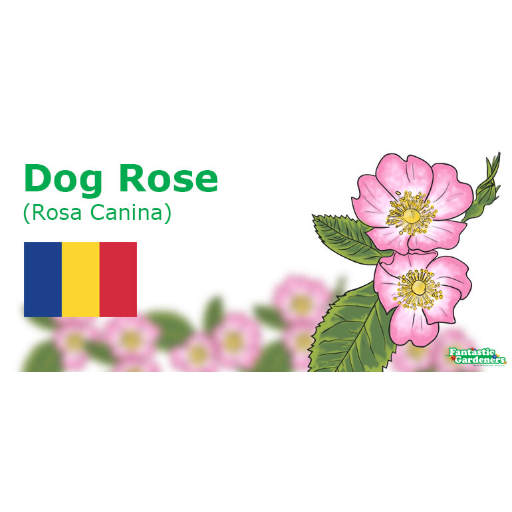
Dog rose (Rosa canina),
a very fast growing deciduous shrub serves as the national flower of Romania. Dog roses can be either self supporting or climbers; the tallest specimens invariably use other plants for support. They make wonderful displays in the hedgerows during June and July and It thrive on a wide range of soils, except very dry or waterlogged ones.Dog rose (Rosa canina), a very fast growing deciduous shrub serves as the national flower of Romania. Dog roses can be either self supporting or climbers; the tallest specimens invariably use other plants for support. They make wonderful displays in the hedgerows during June and July and It thrive on a wide range of soils, except very dry or waterlogged ones.
Transylvanian SageSalvia transsilvanica
s a member of the large sage plant family that grows as a native plant in Romania, although it has been introduced to other parts of the world. Also known as Salvia pratensis, it’s a 2-foot tall flowering perennial that develops lavender-blue flower spikes in summer. This plant prefers moist, sandy soil. It will succeed in United States gardens located in USDA climate zones 4 through 7.
Crocus
This bulb is a fall-blooming Romanian native flower that blooms before its leaves emerge above the ground. It has long, pointed white or violet flowers that resemble an iris. This plant grows best in cool, moist environments.
Globe DaisyThe Globularia trichosantha is a native perennial plant from the Balkan Peninsula. With its blue puffball flowers that bloom in summer, this plant grows to only about 8 inches tall with a spread of 15 inches. It’s rare, but is sometimes grown in other countries besides Romania. In its natural habitat, the globe daisy thrives in dry conditions in rocky grasslands: if you attempt to grow it, it should be easy because it thrives on neglect.
Ukraine – sunflowerSunflower plants are quite common all over the planet due to the widespread applications of sunflower seed oil and edible sunflower seeds. It symbolizes prosperity, has been part of Ukrainian kitchenware decorations for decades and also happens to correspond to one of the colors on the Ukrainian flag.
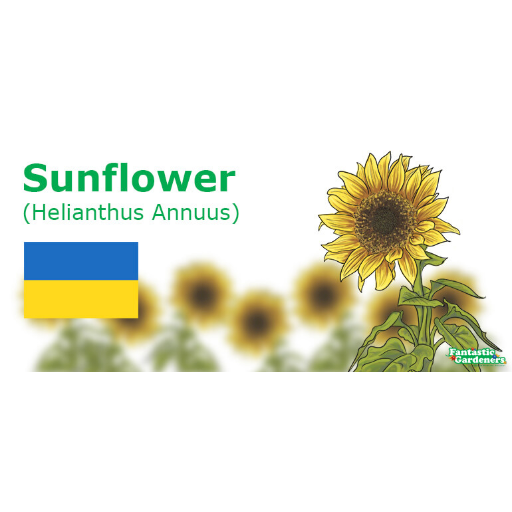
sunflower
The national flower of Ukraine is Sunflower (Helianthus) . Its scientific name is Helianthus annuus . Sunflowerbelongs to Asteraceae family, Heliantheae tribe and Helianthus Genus. Ukraine symbol which is Ukraine flower here is usually tall annual or continuing permanent plants that grow to a height of 300 centimeters (120 in) or more.
The Sun flowers have one or more wide, terminal capitula (flower heads), with bright yellow ray florets at the outside and yellow or Meroon (also known as a brown/red) disc florets inside. Some ornamental cultivars of Helianthus annuus have red-colored ray florets.
https://readnational.com/sunflower-national-flower-of-ukraine/
Crocus banaticus, syn. C. iridiflorus,
is a species of flowering plant belonging to the Iridaceae family, native to the Balkans, particularly in Serbia, Romania and south western Ukraine.[1] It creates its own subgenus in the Crocus subfamily known as Crociris. It is a cormousperennial growing to 4 cm (2 in).
Flowers, usually violet but also white, appear in autumn (fall). The small inner tepals are surrounded by three larger tepals, unlike the more symmetrical crocus species found outside of the subfamily. The flowers are followed by grass-like leaves, lacking the silver stripe normally associated with the genus.[2]
Hollyhock
Hollyhock is another flower native to Ukraine. Several different species of this flower can be found in the country. The flower comes in colors of deep purple, red and white. It is normally planted in gardens but can be found in fields as well. It is commonly used in non-traditional medicine.
- Full access to our public library
- Save favorite books
- Interact with authors
- < BEGINNING
- END >
-
DOWNLOAD
-
LIKE(1)
-
COMMENT()
-
SHARE
-
SAVE
-
BUY THIS BOOK
(from $5.19+) -
BUY THIS BOOK
(from $5.19+) - DOWNLOAD
- LIKE (1)
- COMMENT ()
- SHARE
- SAVE
- Report
-
BUY
-
LIKE(1)
-
COMMENT()
-
SHARE
- Excessive Violence
- Harassment
- Offensive Pictures
- Spelling & Grammar Errors
- Unfinished
- Other Problem





COMMENTS
Click 'X' to report any negative comments. Thanks!