
Accountable Talk Strategy
Accountable Talk Strategy
Description:
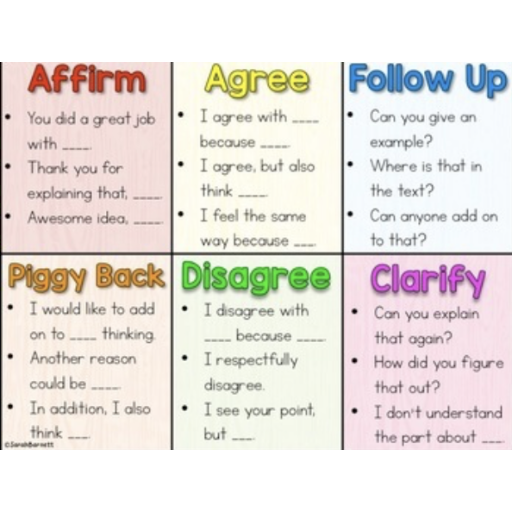
Accountable Talk Strategy involves ideal and meaningful conversations that create learning pathways to promote a students ability to speak, think, talk, listen, clarify, and extend facts and opinions of a task or assignment. Students collaborate with each other after being guided by a teacher. Often these accountability prompts will be used to solve disagreements or respond to each other.
Accountable Talk Strategy
Example:
Two students, Lillie and Grace, are in the middle of an argument because Lillie accused Grace of being a bad friend. They begin yelling at each other and Grace cries, running to their PE teacher, Mrs. Ware. Mrs. Ware pulls the girls into her office and they explain what is going on. After hearing both sides, Mrs. Ware tries an accountability talk strategy by asking the girls to say something they like about each other with "I like that she ___". After both girls say things they like about one another, they decide how to settle the conflict. In this case, they both decide to say they were sorry and hug it out before going back out into the gym to finish their activity.
Effective Questioning Strategy
Effective Questioning Strategy
Description:
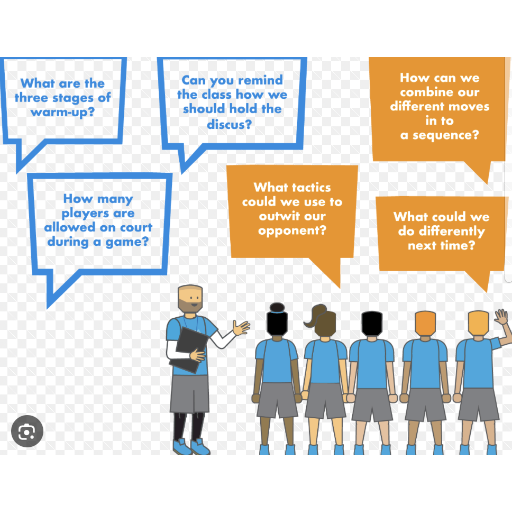
Effective questioning is a skill technique where you ask questions in order for students to understand the task or skill at hand. It is most effective when wanting to improve a performed skill, an instruction, rules, or roles. Most often, effective questioning can be helpful when learning a new sport or activity that the students may not understand or know.
Effective Questioning Strategy
Example:
For class, Coach Layla is beginning a soccer unit for her 1st grade students. Though some kids know it, most of them don't. To introduce the activity, she begins by asking them "Who here knows how we warm up?". She allows a student to answer and keeps asking questions such as "How many players should be on the field?", as well as "How do we make sure our opponent doesn't get the ball?". She makes sure she allows every student to answer and stay engaged in the activity. When the activity is over, Coach asks "Where do we put our soccer balls and jerseys?" to make sure the students know their routine with cleaning up for the next class.
Exit Ticket Strategy
Exit Ticket Strategy
Description:
Exit tickets are a great way to make sure the students understand and assess the lesson that has been taught. They can either be typed up on a piece of paper before class, written down on any paper, note card, posti it note, etc., or orally said to the teacher and each other.
Exit Ticket Strategy
Example:
After a lesson on throwing underhand and overhand, the student spent the next 20 minutes practicing throwing a ball overhand to each other, then underhand. After the lesson, Coach Ken called each student back to the center of the floor to sit down and passed out their exit ticket. It consisted of a picture of a student throwing overhand and underhand, and they had to circle which picture was which. after they circled the pictures and turned them in, they lined up and waited for their teacher to get them for class.
Hands-on Learning Strategy
Hands-on Learning Strategy
Description:
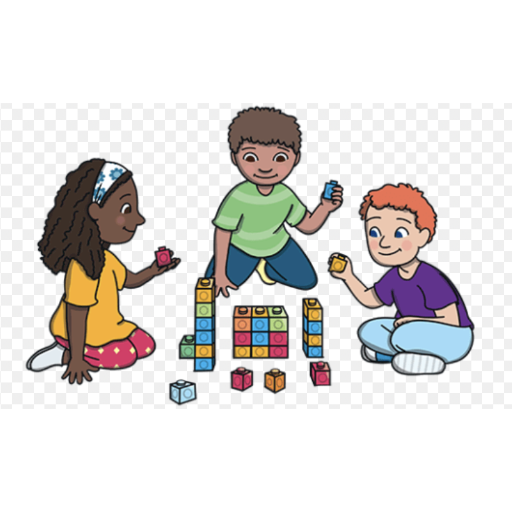
Hands-on learning, also known as kinesthetic learning, is a way for students to participate in a lesson by doing a physical activity rather than watching a video or listening to a lecture. Students are able to make connections in their brains by doing worksheets, coloring a map, or playing a game to improve their coordination and skill.
Hands-on Learning Strategy
Example:
When learning about the different food groups, Coach Taylor has the students watch a BrainPOP video to introduce the lesson. In order for the students to really understand what each food group is, Coach Taylor has a plate with play food that will be passed around that the students can feel, hold, and see. Each group will have its own representation, like a strawberry for fruits, bread for grains, broccoli for vegetables, and steak for protein, also accompanied by a fake glass of milk for dairy.
Music and Songs Strategy
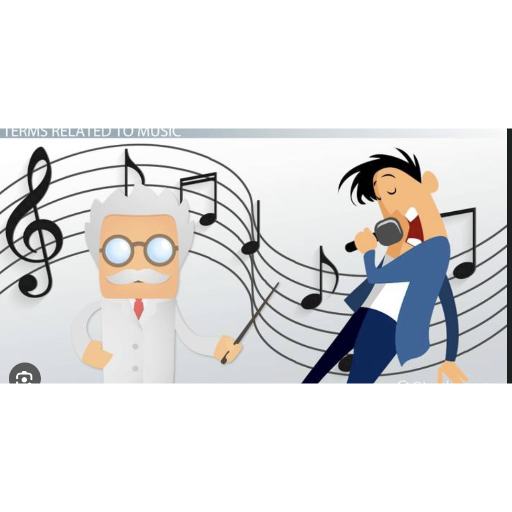
Music and Songs Strategy
Description:
Using music in your physical education class engages students to be interested in a lesson, as well as keep them active during their class. When using music, children are more ready to begin the activity because the music provides a fun idea that students use to do their activity faster and more accurately. It can be used for warmups and cool downs, background noise, and timers. Music lets students get creative in their activity and will help them move more.
Music and Songs Strategy
Example:
To get more students excited for their freeplay day, Coach Ken puts on some music for five minutes to get the kids warmed up and ready to play. After their five minutes, the students are allowed to hoola hoop, play basketball, scooter, dance, etc. for the rest of class. In order for students to keep moving and stay engaged, Coach puts on music in the background. The students love hearing songs and even request some songs so they can listen and dance to it. Coach noticed that the students are more willing to play when he adds music, so he does it for future games.
- Full access to our public library
- Save favorite books
- Interact with authors
- < BEGINNING
- END >
-
DOWNLOAD
-
LIKE
-
COMMENT()
-
SHARE
-
SAVE
-
BUY THIS BOOK
(from $4.99+) -
BUY THIS BOOK
(from $4.99+) - DOWNLOAD
- LIKE
- COMMENT ()
- SHARE
- SAVE
- Report
-
BUY
-
LIKE
-
COMMENT()
-
SHARE
- Excessive Violence
- Harassment
- Offensive Pictures
- Spelling & Grammar Errors
- Unfinished
- Other Problem






COMMENTS
Click 'X' to report any negative comments. Thanks!